June 01, 2011

ആതിര പള്ളി - സഞ്ചാരം കേരളം

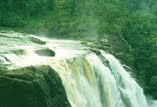
തൃശൂര്‍ നഗരത്തില്‍ നിന്നും 60 കി.മി. സഞ്ചരിച്ചാല്‍ ആതിരപള്ളി യിലെത്താം. കേരളത്തിലെ ഏറ്റവും വലിയ വെള്ളച്ചാട്ടമായ ആതിരപള്ളി വെള്ളച്ചാട്ടം എന്നമട്ട വിനോദ സഞ്ചാരികളെ അങ്ങോട്ട്‌ മാടി വിളിക്കുന്നു എന്പതടി ഉയരത്തില്‍ നിന്നും ശക്തിയോടെ താഴേക് പതിക്കുന്ന വെള്ളച്ചാട്ടം കാണേണ്ട കാഴ്ച തന്നേയ്യാണ് മണ്‍സൂണ്‍ കാലത്ത് നിറഞ്ഞു കവിഞ്ഞു ഒഴുകുന്ന ചാലക്കുടി പുഴ മനം മയക്കുന്ന കാഴ്ച തന്നെയാണ്. അതിനാല്‍ മണ്‍സൂണ്‍ കാലത്ത് ചരപ, വാഴച്ചാല്‍ ആതിരപല്ലി തുടങ്ങിയ സ്ഥലങ്ങള്‍ വിനോദ സഞ്ചാരത്തിന് ഏറ്റവും അനുയോജ്യമാണ്. അപൂര്‍വയിനം സസ്യങ്ങളും വംശനാശ ഭീഷണി നേരിടുന്ന നാലിനം വേഴാമ്പല്‍ പക്ഷികളും ഇവിടെ കാണപ്പെടുന്നു . കാടുമായി ബന്ധപ്പെടുന്ന ധാരാളം കൌതുക വസ്തുക്കളും, കാണികള്‍ക്ക് ആതിരപ്പല്ല്യില്‍ നിന്ന് ശേകരിക്കാം.
കാലാവസ്ഥ: സെപ്റ്റംബര്‍ മുതല്‍ ഫെബ്രുവരി വരെയുള്ള കാലമാണ് ആതിര പള്ളി സന്ദര്‍ശിക്കാന്‍ ഏറ്റവും പറ്റിയത്. ആതിര പള്ളയില്‍ നിന്ന് കൊച്ചി ഇന്റര്‍നാഷണല്‍ എയര്‍പോര്‍ട്ട് ലേക്ക് 55 കിലോമീറ്റര്‍ ദൂരമേയുള്ളൂ 20 കി. മി. മാത്രം അകലെ സ്ഥിതി ചെയ്യുന്ന ചലകുടി റെയില്‍വേ സ്ടഷനില്‍ നിന്ന് അങ്ങോട്ട്‌ വാഹനങ്ങള്‍ വാടകയ്ക്ക് ലഭിക്കും. ചാലക്കുടിയില്‍ നിന്നും, തൃശ്ശൂരില്‍ നിന്ന്നും (63 കി.മി.) ആതിര പള്ളയ്ക് ബസ്സുകള്‍ ഉണ്ട്. കൊച്ചി തൃശൂര്‍ ഹൈവേക്കരിഗിലാണ് ,ആതിര പള്ളി വെള്ളച്ചാട്ടം. ഹൈവേ തമിഴ്നാട്‌മയും ആതിരപള്ളിയെ ബന്ധിപ്പിക്കുന്നു. ആതിരപള്ളിക്ക് ചുട്ടു പടുമുള്ള മറ്റു ആകര്‍ഷണ കേന്ദ്രങ്ങള്‍ ചര്‍ വെള്ളച്ചാട്ടം , ആനകയം ,വാട്ടര്‍ തീം പാര്‍ക്ക്‌, മലക്ക പറ ടി ഗാര്ടെന്‍സ്, തുമ്പൂര്‍ മുഴി ഗര്ടെന്‍സ്, പെരിങ്ങള്‍ കുത്ത്-ഷോളയാര്‍ അണക്കെട്ടുകള്‍ വാഴച്ചാല്‍ വനമേഖല.
കടപ്പാട്: മനോരമ സഞ്ചാരം പേജ് 2011 മെയ്‌ 6 വെള്ളിയാഴ്ച )

April 28, 2011

ജയ്‌ പീ ഗ്രീന്‍സ് ഗോള്‍ഫ് & സ്പാ റിസോര്‍ട്ട് (JP Hotel Group 5* - JP Golf & Spa Resort)


Jaypee Hotels is part of Rs. 10,000 crore Jaypee Group owns and operates four 5 star properties in India. Jaypee Vasant Continental and Jaypee Siddharth are located at New Delhi, Jaypee Palace Hotel & Convention Centre at Agra, and Jaypee Residency Manor at Mussoorie. Apart from catering to the leisure travel, we also host marriage parties and corporate meetings & events at our meeting halls. for more details click here & ഹിയര്‍

April 25, 2011

എബൌട്ട്‌ അബുദാബി ! About Abudhabi

An engaging emirate

Year-round sunshine, pristine beaches, spectacular sand dunes and pulsating cosmopolitan lifestyle await every guest in Abu Dhabi. These, combined with distinctive Arabian hospitality, mystique and world-class infrastructure make Abu Dhabi an enchanting destination for experienced and novice travellers.
The emirate hosts the United Arab Emirates’ capital – Abu Dhabi city. This island capital is characterised by its signature Corniche, which fronts the amazing turquoise waters of the Arabian Gulf. You can stroll, cycle, roller-blade or drive the Corniche for a journey to the tip where the majestic Emirates Palace – one of the world’s most opulent hotels sits on 1.3 kilometres of pristine beach.
In Abu Dhabi city you’ll find all the conveniences of 21st century capital living and with some surprising additions. Don’t forget to take a complimentary guided tour of the awe-inspiring Sheikh Zayed Grand Mosque – one of the world’s largest – and you can book into one of its many beach resorts. Fine dining abounds, as do opportunities for more affordable fare in numerous city centre outlets. Shopping is as diverse as the emirate – there’s everything from marble-clad malls with haute couture brands to a textile souk (market) tucked away behind the main Hamdan Centre and a carpet souk at the Mina (Port).
Take a state-of-the-art highway to the new destinations of Saadiyat and Yas Islands. On Saadiyat, which will be home to the world’s largest single concentration of premier cultural institutions, including the Zayed National Museum, the Louvre Abu Dhabi, Guggenheim Abu Dhabi a performing arts centre and maritime museum. At the existing Manarat Al Saadiyat exhibition centre you can take in the interactive Saadiyat Story and get a glimpse of how this signature destination will eventually be, visit one of many visiting exhibitions regularly hosted here and round the excursion with a mean in the Fanr restaurant. The island is also home to the fabulous Saadiyat Beach Golf Club – designed by the legendary Gary Player – this is the region’s only ‘ocean’ course with several beach front holes.
Further afield, to the east, there’s the ‘Oasis City’ of Al Ain – lying near the Oman border. This tranquil city – Abu Dhabi’s heritage heartland – lies under the shadow of Jebel Hafeet – the emirate’s tallest peak at 1,340 metres. Take a ride up the winding highway which mounts Jebel Hafeet and take a break at the three-star Mercure Hotel to savour the views. Seven oases surround Al Ain – which means spring – and water from the mountains trickles down, guided into traditional ‘falaj’ irrigation systems, to feed the dense date palm groves in the oases. A walk through the preserved Al Ain Oasis is a calming pastime and takes the imagination back generations. In Al Ain you can visit numerous heritage sites and museums, play golf on an all-grass course lying in the shadown of Jebel Hafeet, take the kids to Hili Fun City for a bundle of very cost-effective fun or the Arabian Wildlife Park to see some the world’s last remaining white lions and tigers or visit one of numerous modern shopping malls or traditional souks.
In the Western Region – Al Gharbia – you can find unspoilt beaches and some of the best desertscapes around. You can visit Mirfa and seen the quaint fishing harbour, Jebel Dhanna for a five-star break, take a trip to the Desert Islands Resorts & Spa on Sir Bani Yas Island and join in any of a range of activities, including tours of the Arabian Wildlife Park or relax in the unique architectural splendour of Qasr Al Sarab (Mirage Palace) amid the simply breathtaking dunes of the Rub Al Khali (Empty Quarter).
Events abound all-year-round in Abu Dhabi emirate and you can stay in touch with these, and plan your stay around them, by logging on to: www.abudhabievents.ae.

Whatever you choose to do, you will meet with a welcome which has been extended to travellers throughout the ages. FOR MORE DETAILS CLICK HERE

April 16, 2011

Muziris Heritage !!

Overview

Muziris is the most significant of names in the history of Kerala. Known to Romans and Greeks as Muziris, this port town is mentioned in Indian classics including the Sangham literature. Later the rulers, businessmen, religious groups and artistes added more strength and fame to Muziris. The major communities that are part of the history of Muziris are Adicheras, Perumakkal, Swarupas and various colonizers.

The Kerala State Government has launched a Muziris Heritage Project together with the Union Government and local-self-government bodies. This is a peoples’ movement. All Keralites have a role to play in this venture; especially those residing in the municipalities and panchayats in the project area of Muziris.

Project Muziris

To reinstate the historical and cultural significance of the legendary port of Muziris, the Government of Kerala has initiated the Muziris Heritage Project. Today, the region is dotted with numerous monuments of a bygone era that conjure up a vast and vivid past. The entire project is designed to involve and integrate the local community in all intended developmental initiatives.

The Muziris Heritage Site (MHS) stretches across from the municipality of North Paravur in Ernakulam district to that of Kodungalloor in Thrissur district. It includes four panchayats in Ernakulam district viz. Chennamangalam, Chittatukara, Vadakekkara, Pallippuram, and three panchayats in Thrissur district viz. Eriyad, Mathilakam and Sreenarayanapuram.

FOR MORE PICTURES & DETAILS CLICK HERE :


instaptr.com

Where To Stay Luch and Dine !!

WHERE TO STAY

Comfortable stay at Bangalore: The Libra, Near Christ college Hosur Road, Bangalore 080-41106000 080-25505929 e-mail: thelibra@vsnl.net

Kodaikanal: Luxyry villas available for homely stay. Tangerines Luxury Villas. 94870 74699

House boat favourite journey: Bathel Tour Aleppey 9446616859

Travancore Fest By Manorama !!

Central Keralam; Manora Travancore fest. (Summer shopping carnival) 2011 April 29 to 2011 May 08 in public stadium, Thiruvalla, Fully airconditioned hall.

Available : Apparels, Accessories, Jewelers, Household Appliances, Builders, Entertainment, Food, Lifestyle Products, Furniture, Home Furnishings, Kids Products, Computers and IT Products, Personal Finances and Investment, Automobiles Travel and Holidays, Ethnic Products etc.,

March 21, 2011

Grand Kerala shopping Festival !

GKSF version 4 has concluded on Jan 15th, 2011 with a
mark of new record in gift coupon sales!!! GKSF promises
you with another more thrilling and funfilled version 5,
that is beyond your expectation, Count on it!!!

The shopping extravaganza - Grand Kerala Shopping
Festival, is a Government of Kerala initiative. The version-4
of the shopping festival is all poised to turn Kerala in to a BIG shopping mall. The
event has been conceived and organized to give a big leap for the trade and commerce
in Kerala. for more information click here

March 07, 2011

കാര്‍ണിവല്‍ ബിയോണ്ട് കമ്പാരിസണ്‍ !


Enter ‘Chingam,’ and the entire land is enveloped in an enchanting
aura of Onam, the festival of festivals.
The sky is all azure and the air soft
and soothing, after the rattle-prattle of
‘Karkitakam.’ The harvest being over,
farmers have hung their sickle and are
heaving a sigh of relief. Onam is round
the corner – it is their time to rejoice.
To one and all in Kerala, and Malayalis
the world over, Onam is the springtime
of fulfilment.
One of the major features that
make Onam unique is that it signifies
the communion between man and
nature. Attiring herself in her finest,
nature appears all alluring and strikes
the celebrative chord in man. Neither
too hot nor cold, the climate assumes
a perfect balance between the two
and provides a congenial background
for the festive season to set in. After
the monsoon showers, the lakes and
lagoons, rivers and streams, are full but
friendly, furnishing an apt arena,
beautiful and beckoning, for boat
races and other water sports. And
Keralites on their part avail
themselves of the ‘hard-earned’
holidays for relaxation, recreation and
rejuvenation of every sort. needless
to say, they have been sweating it out almost round the year and now is the time to cool their heads and heels, soul
and sinew, from the heat and dust of the toilsome months that passed by. And they do so in a spirit of spontaneous

gaiety. Onam scenario is incomplete without the vignettes of urchins who flit about in the wee hours of dawn looking for

flowers to decorate ‘Athappookkalams’ – earthen mounds decked with floral carpets on the frontyard of every household.
The custom-bound practice of making earthen icons and floral designs enable the children to imbibe a sense of the

aesthetic, an unconscious urge to enjoy the beauty of the blossom, besides nurturing a bond with mother earth right from

a tender age. May be, ‘pookkalams’ have become glossy sponsored items, particularly in metropolitan cities and
modern townships, and flowers purchased rather than gathered. But then, flowers are flowers either way, and what

better way is there to greet Mahabali than with flowers! The myth of Mahabali too has an element of uniqueness about it.

As the legend goes, the benign king was banished at the pinnacle of glory to the nether world for being the epitome
of the noblest traits in man and god. His was an ideal state, a virtual paradise on earth. And Onam symbolises a solemn

thanksgiving by a grateful people who pay homage to their mythical ruler year after year with joy and jubilation.
Onam is synonymous with food, sumptuous food, to be exact. Known as ‘Onasadya,’ Onam feast is a multicourse
affair served on plantain leaves and savoured in the company of dear ones. It is a gourmet’s delight, to say
the least. Not by feast alone do Malayalis celebrate Onam. The occasion provides an opportunity for them to display
their prowess in the diverse fields of art and craft. Be it on the sprawling grounds in the open or ring-like interior
platforms, they present quite an astounding variety of per forming arts across Kerala. Ranging from Thumbithullal,

hiruvathirakkali and Ammaanaattam to Onathallu, Karadikali and Kathakali, they involve a host of artistes who vie among

one another to enthral the audience and transform the whole heartland into a veritable playhouse. Malayalis go on a

shopping spree during Onam. With the advent of Atham, which marks the beginning of the prime ten-day celebrations,

the festive spirit catches on and virtually every town and village turns vibrant with hectic activity round the clock.
Traders from neighbouring states, and even from the north make a beeline to Kerala long before Onam. They pitch their

stalls in all major cities, mostly by the wayside, and fill them with fabulous clothes. And most of them have a field-day, for

Malayalis spend extravagantly on Onam purchases. ‘Kaanam Vittum Onam Unnanam,’ says an age-old adage.
Onam also involves a lot of buying of new clothes and presenting them to dear ones. In olden days such giftclothes
were called Onakkodi, preferably yellow ones, considered harbingers of good luck. The elders often go ecstatic over
the golden times when Onam was celebrated on tradition-ordained lines. In the past the festivities started at the fag end

of Karditakam, the last month of Malayalam year, and lasted more than a month. Times have changed and a large
part of Onam has of late been commercialised with several sponsorships going into its programming. Such sponsorships,
governmental or through corporate or media channels, have only enlarged its scope, range and overall appeal.
Onam is out and out an exuberant outflow of excitement, a boisterous celebration of life by an entire people. For

Malayalis living in other parts of the world, Onam is an integral part of their lives. Wherever they are bound to, they carry

along with them an unfading souvenir of Onam, a nostalgic piece so to speak. It is more or less an ethnic trait of
a collective consciousness, a sort of plural pride and passion for one’s heritage. And that is exactly why Onam has

emerged as a carnival beyond compare. Onam conjures up quite a number of images and impressions on the mindscape

as though caught through a kaleidoscope – the rapturous reunion of relatives, the fond memory of a gift, the thrill atop a

soaring swing, the breathtaking spectacle of a racing snake-boat, the pulsating crescendo of a ‘Panchavaadyam’

orchestra, the lingering relish of a long-cherished feast, or the all-embracing spirit of camaraderie that cuts across
constraints and barriers. True, Onam manifests itself into a manysplendoured audio-video montage of a magnificent

festival.

ഫീച്ചര്‍ കടപ്പാട് : കേരള കാല്ലിംഗ്, The writer is PRO, Kerala Raj Bhavan,
Thiruvananthapuram

March 05, 2011

ഇന്ക്രെടിബില്‍ ഇന്ത്യ !

Nearly five thousand years back flourished India's first major civilisation along the Indus River valley. The twin cities of Mohenjodaro and Harappa now in Pakistan were ruled by priests and held the rudiments of Hinduism. These civilisations are known to possess a sophisticated lifestyle, a highly developed sense of aesthetics, an astonishing knowledge of town planning and an undecipherable script language. The Indus civilization at one point of time extended nearly a million square kilometres across the Indus river valley. It existed at the same time as the ancient civilizations of Egypt and Sumer but far outlasted them. Surviving for nearly a thousand years the Indus valley civilisation fell to tectonic upheavals in about 1700 BC, which caused a series of floods.

The coming of the Aryans around 1500 BC, gave the final blow to the collapsing Indus Valley civilisation. At the dawn of Vedic ages the Aryans came in from the North and spread through large parts of India bringing with them their culture and religious beliefs. The Four Vedas or the important books of Hinduism were compiled in this period.


ഫോര്‍ മോര്‍ ടെടില്സ് ക്ലിക്ക് ഹിയര്‍

ഗോഡ്സ് ഓണ്‍ കണ്‍ട്രി !

Welcome to Kerala, God's Own Country. With the Arabian Sea on the west, the western ghats towering 500 - 2700m on the east and Kerala is networked by forty-four rivers. Kerala is a very easy place to simply sit back and enjoy. The name means "land of coconuts" and the palms shade nearly the entire state from the tropical sun; many call the beach at Kovalam the best in India, tranquil stretches of emerald backwaters, lush green hill stations and exotic wildlife, ayurvedic health resorts, enchanting art forms, magical festivals, historic and cultural monuments, an exotic cuisine… all of which offers a unique experience.

Kerala is one of the ten 'Paradises Found' declared by the National Geographic Traveler, for its diverse geography and overwhelming greenery. It is a land much acclaimed for the contemporary nature of its cultural ethos, and much appreciated for the soothing, rejuvenating paradise that it is.


GENERAL INFORMATION

Area: 38,863 sq km, which is 1.27% of India's total land area and is located at the Southwest tip of the India's main land
Weather: Tropical
Summer: April-June [24 - 33 degree Celsius]
Monsoon: July-September [22 - 27 degree Celsius
Winter: October-March [22 - 32 degree Celsius]
High Season: December-May
Capital: Thiruvananthapuram (Trivandrum)
Language: Malayalam; however English is widely spoken and understood by the fully literate populace of Kerala.
Number of Districts: 14
Major Cities: Thiruvananthapuram, Kochi (Ernakulam district) & Kozhikode (Calicut)

By Air: The International airports at Thiruvananthapuram , Kochi (Cochin) & Kozhikode facilitate easy access by air. Direct flights operate from Singapore, Colombo, Maldives, Kuwait, Muscat, Dubai, Abu Dhabi, Riyadh, Doha and Bahrain.
By Rail: All major tourist destinations and important cities of India are well-connected by rail to Kerala.
Food: Most restaurants, coffee shops, eateries or cafes offer a Cosmopolitan fare for Chinese, Continental, Indian or American. You can find many who specialize in Kerala Delicacies.
Clothing: Ideally light cottons. However the cooler hill stations may warrant woolens
Communication: Kerala has a well-knit communications network. With telephone, fax and Internet centers in almost every corner. Enabling you to get in touch with any part of the world easily.
Religion: 58 % Hindu, 21 % Muslim and 21 % Christians

For further information log on to http://www.keralatourism.org


March 03, 2011

ഓണം ഇന്‍ കേരളം

Kerala onam festivals

Kerala festivals Kerala is a land of colourful festivals, which have a long history and tradition behind them. Kerala's innumerable festivals however stand out because of their uniqueness.

Onam Festival. Onam is the most famous festival of Kerala. All Malayali's irrespective of religion celebrates it. It falls in the Malayalam month of Chingam (Aug-Sept). It is the harvest festival of Kerala. Legend states that Onam is celebrated as the home coming of Mahabali, the king who ruled over Kerala in the age of plenty and was pushed down to the infernal regions (Patala) by Lord Vishnu in the form of Vamana Onam is celebrated as a national festival of Kerala. It synchronizes with the tourist week celebration, which starts formally on the day of Atham asterism. The image of Thrikkakara Appan (Vishnu in the form of Vamana) is installed in every Hindu home during the Onam season. Children go around collecting flowers and decorate them in the front portion of the house in various designs and patterns. The most important days of the Onam festival are Uthradom and Thiruvonam days. On the latter, a grand feast is held in every home. Onam also provides an occasion for family get-together among the Keralites. It's a perfect example for the religious harmony of the state.

vallamkali or (boat rices)

This is a typical keralite festival of boat races. It is held in August in the Punnamada Kayal, which commemorates the visit
of former Prime Minister, Late Jawaharlal Nehru to Alleppey. Similar boat races are held also at Aranmual and Champakulam, which has a religious significance. The later commemorates an episode involving the idol of Sri Krishna, which was lifted from Kurichi by the Chempakasseri Raja's men for consecration in the Ambalapuzha. The idol had to rest in the house of a Syrian Christian at Chempakulam. Therefore, even today the flag and coir rope required for the Chempakulam boat race is supplied from the local Kallurkad Church.
Boat races and processions at Ambalapuzha,in July
- Nehru Trophy boat race in the month of August
- Boat races at Thalavady in Alappuzha, Kumarakom,
- Mannar, Aranmula, and Thiruvandoor near

Hindu Festivals

Vishu

The first month of Malayalam Calendar is Medam (April-May) and the first day of Medam is celebrated as Vishu, the New Year day. Begin an auspicious day; it is a common belief that the fortune of the coming year depends on the first day. So the first day begins with ceremony of Kani Kanal, which literally means first sight. At the dawn, the Malayali's begin the first day of the Year by waking up in front of Kani. The Kani includes gold ornament, white cloth, a measure of rice or paddy, bell metal mirror, flowers of the Konna tree (Cussia fistula), halved jack fruits, halved coconuts, yellow cucumber, and two standing oil lamps emitting sparkling light their eyes. Another interesting features of this day are Kaayi neetal where the elder members in the family gift money to the younger ones.

Mahasivarathri

Hindus celebrate Mahasivarathri, all over the world in Kumbam (Feb-March). It commemorates the day on which Lord Shiva consumed the deadly poison (Kalakuda visham) to save the world from destruction. The offering of special pooja and abhishekhams, and the presentation of cultural programmes in all the Shiva temples celebrate the day. The annual Sivarathri festival held on the banks of River Periyar at Alwaye, is one of the most spectacular local festivals of Kerala, which attracts thousands of pilgrims from all over the state. It has been compared to the Kumbamela at Prayag.

Navarathri

Literally Navarathri means Nine nights. This festival is celebrated for Navagraha Naayagi (Nine nymphs). It is called by different names in different parts of India. In Karnataka, it is called Dasara, in Bengal - Kali Pooja and in this state it is known as Saraswathy Pooja. Saraswathy is known as goddess of Knowledge. On this day all tools and books are kept for Pooja. Children who are to begin their schooling are made to write the first alphabet in rice with their finger.

Asthami Rohini

The birthday of Lord Krishna is celebrated with great importance on this day. It is held in the month of Chingam (Aug- Sept). Devotees visit the Krishna temples where special Pooja and cultural programmes are held.

Thrikarthiaka

This festival is celebrated in the month of Vrischikam (Nov -Dec). Display of light in the evening is a unique part of the festival.

Thiruvathira

Thiruvathira falls on the month of Dhanu (December-January) and is a women's festival. It commemorates the death of Kamadeva, the cupid of Hindu mythology. The aim of the celebration is conjugal harmony and happiness. The dance form Thiruvathirkkali is associated with this celebration.

Pooram Festival - Meenum (March-April)
Sabarimala Festivals - Vrishikam (November-December)
Ashtami at Vaikom - Kumbham (February-March)

Thrissur Pooram - Medam (April-May)

Christian Religious Festival
Christmas

All Christians celebrate Christmas as the birthday of Jesus Christ on 25th Dec. Holy Mass is held in all the churches in the state. Carol singing, setting up of Christmas tree in all churches and homes, exchanges of cards and receiving gifts from Santa Claus are all integral part of the festivities associated with the birth of Jesus Christ. There is a feast in every Christian home with meat as a special item, and the celebrations of Christmas leave good memories in every heart.

Easter

This is another important festival of Christians, which commemorates the resurrection of Jesus Christ. Easter usually falls in March-April, after 40 days lent of fast and penance. Christians go for mid-night mass, as a memory of the resurrection of Jesus, 2000 years ago.

Other Christian Festivals
St.George's Church, Edathwa - 27 April to 7th May
St.Sebastian's Church, Arathungal - 20th January to 31st January
St George's Church, Aruvithura - 22nd to 24th April
St Thomas Shrine, Malayattur - Last week of March or first week of April
St Mary's Orthodox Church, Manarcad - Sepember 1st to 9th
Parumala, Mannar
Maramon Convention

Muslim Religious festivals

Bakrid

The Bakrid commemorates Ibrahim's (Abhraham) offering of his only son as a sacrifice in obedience to God's command. The Muslims enjoy hearty feasts on Bakrid day. The rich may sacrifice a he goat or a bullock and distribute it among Frieds, relatives and the poor. The famous Haj is performed after the celebration of Idul Azha.

Idul Fitr

Idul Fitr is celebrated after the conclusion of the Ramzan fast when Muslims give up all kind of food and drink during the day and spend the major part of the night prayer.

Miladi Sharif

Miladi Sharif, celebrated on a large scale in April, Commemorates the birth of the prophet. This celebration has acquired its present dimensions only in recent times. Previously the day was observed by the Muslims by reading what is commonly known as Maulud which is a short treatise in Arabic celebrating the birth, life, work and sayings of the prophet or some saint.

Muharram

Muharram is another festival celebrated by Muslims on the 10th day of Muharram the forbidden month, which marks the beginning of the Hijra year.

Chandankudam at Beemapally

The Chandankudam at Beemapally near Thiruvananthapuram is one of the most colourful of Muslim festival in Kerala. It is said to be the death anniversary of Beema Beeevi, a devout pilgrim lady who came to Kerala from Mecca. The festival begins on the 1st of Jamadul Akhar of the Hijira Era (October) and lasts ten days. Carrying earthen posts smeared with sandal wood paste and the mouth of the pot tightly closed with a Jasmine garland around the edges, thousands of pilgrims go around the mosque and the hallowed tomb of the devout lady in procession. Then the earthen port with money is placed at the tomb as an offering.

Local Festivals

Jarram Nercha - Thervath Mosque, Pallanchathanur
Nercha Festival - Ottapalam Mosque
Jarram Nercha - Theruvath Mosque
Malappuram Nercha - Malappuram Mosque
Kodikuthu Festival - Kanjiramattom Mosque
Chandanakkudam Festival- Beemapalli, Thiruvananthapuram

Alleppey (Allaphuzha) - Boat races

- Boat races and processions at Ambalapuzha,in July
- Nehru Trophy boat race in the month of August
- Boat races at Thalavady in Alappuzha, Kumarakom,
- Mannar, Aranmula, and Thiruvandoor near
- Chengannur during Onam festival in Septmeber
- Sivagiri Festival at Varkala ,in the month of Decemeber
- St.George's Church festival in Edathwa from 27 April to 7th May
- St.Sebastian's Churchin, Arathungal from 20th January to 31st January

Ernakulam (Cochin)

- Utram festival at Tripunithura in the month of February
- Sivarathri Festival at Aluva Manappuram in the month of February
- Sankaracharaya Jayanthy in the month of May at Kalady
- St. George Ferona Church Festival at Edappally, in the month of May
- Ashtami at Vaikom in November
- St Thomas Shrine festival at Malayattur in March / April
- Kodikuthu Festival at Kanjiramattom Mosque 25 km from Kochi

Kottayam

- St George's Church festival in Aruvithura in the month of April
- St Mary's Orthodox Church at Manarcad in the month of September

Malappuram

- Malappuram Nercha in Malappuram Mosque

Palakkad (Palghat)

- Nercha Festival in Ottapalam Mosque

Pathanamthitta

- Makara Vilakku Festival at Sabarimala Temple in January
- Pathishtadinam.at Sabarimala in the month of June
- Ochirakali - A festival of martial Arts at Ochira in June
- Madalam Festival at Sabarimala Temple in November
- Madala Pooja at Sabarimala Temple in December
- Annual Parumala Perunnal at Parumala Church, 11 km from Thiruvalla
- Maramon Convention in Maramon- Asia's largest Christian gathering,
in the month of February.

Thrissur (Trichur)

- The Elephant march in the month of January
- Kodiyettu at Guruvayoor in March
- Ashtami Festival & Elephant races at Krishna Temple at Guruvayoor in March
- Thrissur Pooram at Trissur in April
- Arattupuzha Pooram at Arattupuzha Temple in the month of April
- Krishna Jayanthi at Guruvayoor in October
- Ekadasi festival at Guruvayoor in December

Thiruvananthapuram (Trivandrum)
- The Elephant march in the month of January
- Onam Tourism week in the month of August -Septembert
- Mahanavami - Dance & Music Festival in the month of October
- Chandanakkudam Festival in Beemapalli

In keralaincredible.blogspot.com. the details are categorised, updated regularly, and we hope it will be much easier for you to find any details about Kerala and malayalam padam.keralaincredible.blogspot.com. contains many sections like Kerala tourism, Kerala History, Kerala Classifieds, Kerala cuisine, Database of Kerala educational institutions, hospitals, Hotels, Resorts, malayalam padam etc. Thanks to all our team members and patrons who helped us a lot with their valuable suggestions and content contributions. We hope that you enjoy your time spent at keralaincredible.blogspot.com.

We have worked hard to make it one of the best sites on the net! If you have any comments or questions please contact us. Your valuable comments and suggestions to improve this site would be highly appreciated.

ഓണം ഇന്‍ കേരളം

Kerala onam festivals

Kerala festivals Kerala is a land of colourful festivals, which have a long history and tradition behind them. Kerala's innumerable festivals however stand out because of their uniqueness.

Onam Festival. Onam is the most famous festival of Kerala. All Malayali's irrespective of religion celebrates it. It falls in the Malayalam month of Chingam (Aug-Sept). It is the harvest festival of Kerala. Legend states that Onam is celebrated as the home coming of Mahabali, the king who ruled over Kerala in the age of plenty and was pushed down to the infernal regions (Patala) by Lord Vishnu in the form of Vamana Onam is celebrated as a national festival of Kerala. It synchronizes with the tourist week celebration, which starts formally on the day of Atham asterism. The image of Thrikkakara Appan (Vishnu in the form of Vamana) is installed in every Hindu home during the Onam season. Children go around collecting flowers and decorate them in the front portion of the house in various designs and patterns. The most important days of the Onam festival are Uthradom and Thiruvonam days. On the latter, a grand feast is held in every home. Onam also provides an occasion for family get-together among the Keralites. It's a perfect example for the religious harmony of the state.

vallamkali or (boat rices)

This is a typical keralite festival of boat races. It is held in August in the Punnamada Kayal, which commemorates the visit
of former Prime Minister, Late Jawaharlal Nehru to Alleppey. Similar boat races are held also at Aranmual and Champakulam, which has a religious significance. The later commemorates an episode involving the idol of Sri Krishna, which was lifted from Kurichi by the Chempakasseri Raja's men for consecration in the Ambalapuzha. The idol had to rest in the house of a Syrian Christian at Chempakulam. Therefore, even today the flag and coir rope required for the Chempakulam boat race is supplied from the local Kallurkad Church.
Boat races and processions at Ambalapuzha,in July
- Nehru Trophy boat race in the month of August
- Boat races at Thalavady in Alappuzha, Kumarakom,
- Mannar, Aranmula, and Thiruvandoor near

Hindu Festivals

Vishu

The first month of Malayalam Calendar is Medam (April-May) and the first day of Medam is celebrated as Vishu, the New Year day. Begin an auspicious day; it is a common belief that the fortune of the coming year depends on the first day. So the first day begins with ceremony of Kani Kanal, which literally means first sight. At the dawn, the Malayali's begin the first day of the Year by waking up in front of Kani. The Kani includes gold ornament, white cloth, a measure of rice or paddy, bell metal mirror, flowers of the Konna tree (Cussia fistula), halved jack fruits, halved coconuts, yellow cucumber, and two standing oil lamps emitting sparkling light their eyes. Another interesting features of this day are Kaayi neetal where the elder members in the family gift money to the younger ones.

Mahasivarathri

Hindus celebrate Mahasivarathri, all over the world in Kumbam (Feb-March). It commemorates the day on which Lord Shiva consumed the deadly poison (Kalakuda visham) to save the world from destruction. The offering of special pooja and abhishekhams, and the presentation of cultural programmes in all the Shiva temples celebrate the day. The annual Sivarathri festival held on the banks of River Periyar at Alwaye, is one of the most spectacular local festivals of Kerala, which attracts thousands of pilgrims from all over the state. It has been compared to the Kumbamela at Prayag.

Navarathri

Literally Navarathri means Nine nights. This festival is celebrated for Navagraha Naayagi (Nine nymphs). It is called by different names in different parts of India. In Karnataka, it is called Dasara, in Bengal - Kali Pooja and in this state it is known as Saraswathy Pooja. Saraswathy is known as goddess of Knowledge. On this day all tools and books are kept for Pooja. Children who are to begin their schooling are made to write the first alphabet in rice with their finger.

Asthami Rohini

The birthday of Lord Krishna is celebrated with great importance on this day. It is held in the month of Chingam (Aug- Sept). Devotees visit the Krishna temples where special Pooja and cultural programmes are held.

Thrikarthiaka

This festival is celebrated in the month of Vrischikam (Nov -Dec). Display of light in the evening is a unique part of the festival.

Thiruvathira

Thiruvathira falls on the month of Dhanu (December-January) and is a women's festival. It commemorates the death of Kamadeva, the cupid of Hindu mythology. The aim of the celebration is conjugal harmony and happiness. The dance form Thiruvathirkkali is associated with this celebration.

Pooram Festival - Meenum (March-April)
Sabarimala Festivals - Vrishikam (November-December)
Ashtami at Vaikom - Kumbham (February-March)

Thrissur Pooram - Medam (April-May)

Christian Religious Festival
Christmas

All Christians celebrate Christmas as the birthday of Jesus Christ on 25th Dec. Holy Mass is held in all the churches in the state. Carol singing, setting up of Christmas tree in all churches and homes, exchanges of cards and receiving gifts from Santa Claus are all integral part of the festivities associated with the birth of Jesus Christ. There is a feast in every Christian home with meat as a special item, and the celebrations of Christmas leave good memories in every heart.

Easter

This is another important festival of Christians, which commemorates the resurrection of Jesus Christ. Easter usually falls in March-April, after 40 days lent of fast and penance. Christians go for mid-night mass, as a memory of the resurrection of Jesus, 2000 years ago.

Other Christian Festivals
St.George's Church, Edathwa - 27 April to 7th May
St.Sebastian's Church, Arathungal - 20th January to 31st January
St George's Church, Aruvithura - 22nd to 24th April
St Thomas Shrine, Malayattur - Last week of March or first week of April
St Mary's Orthodox Church, Manarcad - Sepember 1st to 9th
Parumala, Mannar
Maramon Convention

Muslim Religious festivals

Bakrid

The Bakrid commemorates Ibrahim's (Abhraham) offering of his only son as a sacrifice in obedience to God's command. The Muslims enjoy hearty feasts on Bakrid day. The rich may sacrifice a he goat or a bullock and distribute it among Frieds, relatives and the poor. The famous Haj is performed after the celebration of Idul Azha.

Idul Fitr

Idul Fitr is celebrated after the conclusion of the Ramzan fast when Muslims give up all kind of food and drink during the day and spend the major part of the night prayer.

Miladi Sharif

Miladi Sharif, celebrated on a large scale in April, Commemorates the birth of the prophet. This celebration has acquired its present dimensions only in recent times. Previously the day was observed by the Muslims by reading what is commonly known as Maulud which is a short treatise in Arabic celebrating the birth, life, work and sayings of the prophet or some saint.

Muharram

Muharram is another festival celebrated by Muslims on the 10th day of Muharram the forbidden month, which marks the beginning of the Hijra year.

Chandankudam at Beemapally

The Chandankudam at Beemapally near Thiruvananthapuram is one of the most colourful of Muslim festival in Kerala. It is said to be the death anniversary of Beema Beeevi, a devout pilgrim lady who came to Kerala from Mecca. The festival begins on the 1st of Jamadul Akhar of the Hijira Era (October) and lasts ten days. Carrying earthen posts smeared with sandal wood paste and the mouth of the pot tightly closed with a Jasmine garland around the edges, thousands of pilgrims go around the mosque and the hallowed tomb of the devout lady in procession. Then the earthen port with money is placed at the tomb as an offering.

Local Festivals

Jarram Nercha - Thervath Mosque, Pallanchathanur
Nercha Festival - Ottapalam Mosque
Jarram Nercha - Theruvath Mosque
Malappuram Nercha - Malappuram Mosque
Kodikuthu Festival - Kanjiramattom Mosque
Chandanakkudam Festival- Beemapalli, Thiruvananthapuram

Alleppey (Allaphuzha) - Boat races

- Boat races and processions at Ambalapuzha,in July
- Nehru Trophy boat race in the month of August
- Boat races at Thalavady in Alappuzha, Kumarakom,
- Mannar, Aranmula, and Thiruvandoor near
- Chengannur during Onam festival in Septmeber
- Sivagiri Festival at Varkala ,in the month of Decemeber
- St.George's Church festival in Edathwa from 27 April to 7th May
- St.Sebastian's Churchin, Arathungal from 20th January to 31st January

Ernakulam (Cochin)

- Utram festival at Tripunithura in the month of February
- Sivarathri Festival at Aluva Manappuram in the month of February
- Sankaracharaya Jayanthy in the month of May at Kalady
- St. George Ferona Church Festival at Edappally, in the month of May
- Ashtami at Vaikom in November
- St Thomas Shrine festival at Malayattur in March / April
- Kodikuthu Festival at Kanjiramattom Mosque 25 km from Kochi

Kottayam

- St George's Church festival in Aruvithura in the month of April
- St Mary's Orthodox Church at Manarcad in the month of September

Malappuram

- Malappuram Nercha in Malappuram Mosque

Palakkad (Palghat)

- Nercha Festival in Ottapalam Mosque

Pathanamthitta

- Makara Vilakku Festival at Sabarimala Temple in January
- Pathishtadinam.at Sabarimala in the month of June
- Ochirakali - A festival of martial Arts at Ochira in June
- Madalam Festival at Sabarimala Temple in November
- Madala Pooja at Sabarimala Temple in December
- Annual Parumala Perunnal at Parumala Church, 11 km from Thiruvalla
- Maramon Convention in Maramon- Asia's largest Christian gathering,
in the month of February.

Thrissur (Trichur)

- The Elephant march in the month of January
- Kodiyettu at Guruvayoor in March
- Ashtami Festival & Elephant races at Krishna Temple at Guruvayoor in March
- Thrissur Pooram at Trissur in April
- Arattupuzha Pooram at Arattupuzha Temple in the month of April
- Krishna Jayanthi at Guruvayoor in October
- Ekadasi festival at Guruvayoor in December

Thiruvananthapuram (Trivandrum)
- The Elephant march in the month of January
- Onam Tourism week in the month of August -Septembert
- Mahanavami - Dance & Music Festival in the month of October
- Chandanakkudam Festival in Beemapalli

In keralaincredible.blogspot.com. the details are categorised, updated regularly, and we hope it will be much easier for you to find any details about Kerala and malayalam padam.keralaincredible.blogspot.com. contains many sections like Kerala tourism, Kerala History, Kerala Classifieds, Kerala cuisine, Database of Kerala educational institutions, hospitals, Hotels, Resorts, malayalam padam etc. Thanks to all our team members and patrons who helped us a lot with their valuable suggestions and content contributions. We hope that you enjoy your time spent at keralaincredible.blogspot.com.

We have worked hard to make it one of the best sites on the net! If you have any comments or questions please contact us. Your valuable comments and suggestions to improve this site would be highly appreciated.

March 02, 2011

Thrissur - My own District - ജനറല്‍ ഇന്‍ഫര്‍മേഷന്‍ !!


TOPGEOGRAPHY AND CLIMATE

Area and population: It is bounded on the north by Palakkad district, on the east by Palakkad district and Coimbatore district of Tamil Nadu, on the south by Ernakulam and Idukki districts, and on the west by the Arabian Sea. The area of the district is 3032 sq. km., while the population is 2,975,440 according to 2001 census.

Natural Divisions: Descending from the heights of the Western Ghats in the east, the land slopes towards the west forming three distinct natural divisions - the highlands, the plains and the sea board

River System: The Periyar, the Chalakudy, the Karuvannur, and the Ponnani (Bharatha Puzha) are the main river systems in the district. They take their origin from the mountains on the east, and flow westward and discharge into the Arabian Sea. There are a number of tributaries also joining these main rivers.

Climate

The district has a tropical humid climate with an oppressive hot season and plentiful and seasonal rainfall. The hot season from March to May is followed by the South West Monsoon season from June to September. The period from December to February is the North East Monsoon season, although the rain stop by the end of December and the rest of the period is generally dry.

FLORA AND FAUNA

The mountain ranges with thick evergreen forests afford ideal abode for various animals and game including diverse birds while the middle country with hills and low plateau, mostly cleared for cultivation and human habitation, still affords shelter and food for many of the smaller mammals, birds and reptiles and also many lower animals of diverse groups. The lowlands of the extreme west, bordering the coastline are dotted with backwaters and estuaries of rivers, all connected by an interesting system of canals forming a continuous waterway. Its waters abound in fish and afford feeding ground for many water birds, local and migrant, while the plains have rich fauna representing all groups. Among the mammals the Primates are represented by the langurs and monkeys. Coconut palm and paddy are mainly cultivated in the lowlands.
PEOPLE

The total population of Thrissur district according to the census of 2001 is 2,975,440 of whom 1,422,047 are men and 1,553,393 are women. Hindus constitute the bulk of the population of this district. Other communities are Christians and Muslims. The Konkani Brahmins are another immigrant caste and they are found mainly in Cranganore and Mukundapuram taluks.

The Nairs who till recently followed the Marumakkathayam family system constitute the most important section among the Hindus of Thrissur. Now a vast majority of them have taken to agriculture while others have been absorbed in Government service and other professions. Till a few decades ago, the Nairs were divided into several sub-castes and inter-dining and inter-marriages were not permitted among them. The Nairs attached to Namboodiri and Kshatriya houses for certain domestic and religious services were called Illathu Nairs and Swarupattil Nairs respectively. Charna Nairs, Pallichans, Vattekadans, Odathu Nairs, Auduru Nairs and Attikurussi Nairs are other Nair subdivisions. Every Nair had a title affixed to his name. Achan, Kartha, Kaimal and Mannadiar were some of the titles of nobility conferred on the Nairs by the Rajas of Cochin while Panikkar and Kurup were the titles of those who maintained Kalaries as their hereditary profession. Menon was the title conferred on the Nairs who followed a literacy career. When the country underwent tremendous changes, strict observations of caste rules fell into disuse.

The Samanthans, though very few in number in the district, are said to have sprung from the union of Kshatriya men with Nair women. They have marumakkathayis. The Ezhavas who follow Makkathayam are numerically one of the strongest communities in Thrissur. They have attained important positions as merchants, landowners and cultivators. A good number of them have also taken to learned professions. Velythedans, Velakkattalavans and Chaliyans are hereditary washermen, barbers and weavers respectively. Ezhuthachans otherwise known as Kadupottans who follow the patriarchal system of inheritance are supposed to be the descendants of Pattar Brahmins. They are hereditary village school masters. The Valans, Arayans and Mukkuvas are fishermen mostly living in the coastal areas of Thrissur district. Besides, there are a number of other castes like the Mannans, Velans, Pulluvans and Pattilans in the district.

Another section among the Hindus is the Kammalas who are divided into carpenters, masons, braziers, blacksmiths, goldsmiths etc. As their service is essential, they are till engaged in their traditional occupations. But in recent years a sizable section of them have taken to modern education and steady progress. The Devanga Chettis and Kaikolans are weaving castes found in Mukundapuram taluk. They immigrated into the district from Mysore and Coimbatore respectively. The Vaniyans Kudumis, Pandithans, Kallans, Pandarams, Ambattans, Vannans, Chakkiliyans and Kusavan are also immigrant castes. The Vaniyans wear the sacred thread and resemble Konkani Brahmins. The Pandarams are engaged in making Pappadam, the favourite crisp cake of the Malayalees. Ambattans are Tamil barbers and Vannans are Tamil washermen.

The Scheduled Castes and Scheduled Tribes form a significant section among the Hindus of the district. The former are mainly agricultural labourers and are found in all the Taluks. The Scheduled Tribes of the district are the Kadar, the Malayar and the Mathuvans. The Kadar of the area belong to two clans, the Anamala Kadar living at Parambikulam and West Kadar living at Adirappilli. The Malayar and Kadar are nomadic people.

Christians form the second largest community in the district. It is strange that Cranganore where the Gospel of Christ is believed to have been first preached in India should have the lowest proportion of Christians among the taluks of the district. The earliest Church in the district was a Nestorian branch of the Asiatic Church presided over by Bishops usually ordained in Persia. The early Christians were known as Syrian Christians. The Syrians Catholics, Latin Catholics, Jacobites, the Reformed Syrians and Protestants are some of the main sections of the Christian Community in the district . In Thrissur and its neighbourhood there is a small community of Christians known as Chaldeans.

The Christians have a predominant place in the social and economic life of the district. Trade and agriculture are the chief occupations of the community. There have been several survivals of Hindu customs among the Christians such as caste prejudice, belief in astrology, omens, witchcraft and charms, the tying of the tali as part of the marriage ceremony and its removal on the death of the husband, the performance of Sradha or the annual ceremony for the soul of the dead etc.

Muslims form the third major community in the district. A majority of them are found in Chavakkad and Kodungalloor taluks. Most of them are Sunnis. Some of the Muslims are cultivators or traders, while the majority are boatmen, fishermen and labourers of every description.

CUSTOMS AND RITUALS

Serpent (naga) worship and ancestor worship, evidently non-Aryan practices, have been widely prevalent in the district. The temples here are centres of religious activity. The Vadakkunnathan Temple at Thrissur, Koodalmanikam temple at Irinjalakuda, the Kurumba Bhagavathi temple at Kodungalloor, the Sri Rama Temple at Triprayar, the Sri Krishna Temple at Guruvayoor are some of the reputed shrines. The prominent Gods and Goddesses worshipped are Vishnu, Siva, Bhagavathi, Siva, Bhagavathi, Subramonia and Sastha.

Fasting is a significant form of religious observance. It is observed on Shashti, Ekadasi, Pradosham, Full Moon and New Moon days. On Shashti viz. the sixth day of the fortnight, fast is observed by those who wish for issue. Ekadasi is sacred to Vishnu and Pradosham to Siva. Fast in honour of the Goddess Parvathi is observed on Full Moon days. The observance of festivals is an important aspect of religious activities. Here special mention may be made of the three major festivals of the Malayalees viz. Onam, Vishu and Tiruvathira. Among the ceremonies still current may be mentioned Namakaranam, Chorunu, Vidyarambham, Upanayanam and Sradha.

The laws of inheritance prevalent in the district have been the makkathayam (Patrilineal) and Marumakkathayam (Matrilineal system). Marumakkathayam is the dominant one which most of the people were in allegiance. The Ambalavasis, the Kshatriyas, Samantans, Velekkattavans, Veluthedans and a few other castes have followed the Marumakkathayam system in the district. Among the communities that have followed the Makkathayam system may be mentioned the Namboothiris, Ezhavas, Kammalas, Kanakkans, Cherumans, Tanda Pulayans, Vettuvas, Ezhuthachans, Kanisans, Panans, Perumannans, Mannans, Velas, Velans, Arayans, Amukuvans, Mukkuvans, Marakkans and all the hill tribes. The Christians and Muslims also have been Makkathayis.

THRISSUR POORAM

The famous Thrissur Pooram is an annual festival celebrated during April-May in the Vadakkumnathan temple here. During the festival idols of Gods and Goddesses from various temples are brought in all pomp and pagentry with the play of drums and musical instruments and pro-technics to the Thekkinkadu Maaidan. Lakhs of people attend the festival every year. An all India Exhibition is also conducted every year during the Pooram days under the combined auspices of the Thiruvampady and Paramekkavu Devaswoms at the temple premises.ഫോര്‍ മോര്‍ ഇന്‍ഫര്‍മേഷന്‍ ക്ലിക്ക് ഹിയര്‍

കടപ്പാട് : http://www.tsr.kerala.gov.in


Thrissur About this sound pronunciation (help·info) (Malayalam: തൃശൂര്‍) previously known as Trichur, is a city in the Indian state of Kerala. It is the headquarters of the Thrissur District.[1] Thrissur city is built around a 65-acre (26 ha) hillock called the Thekkinkadu Maidan which seats the Vadakkumnathan temple. Thrissur is the 5th most populous city in Kerala by population[2] and the second-largest city corporation by area in the state.[3] It is located about 290 kilometres (180 mi) north of the state capital Thiruvananthapuram and 80 kilometres (50 mi) north of the major port city of Kochi.[2][4]

Thrissur is also known as the Cultural Capital of Kerala because of its cultural, spiritual and religious leanings towards history.[5] It houses the Kerala Sangeetha Nadaka Academy, Kerala Lalita Kala Akademi and Kerala Sahitya Academy.[6]Thrissur Pooram festival, the most colourful and spectacular temple festival in Kerala.[7][8] The festival is held at the Thekkinkadu Maidan in April or May.[5] Thrissur has a large number of well-known temples including the Thiruvambadi Sri Krishna Temple, Vadakkumnathan temple and Paramekkavu temple, as well as two famous churches, the Our Lady of Lourdes Metropolitan Cathedral and the Basilica of Our Lady of Dolours.[9] Thrissur is also the venue of Pulikali during Onam celebrations in August or September. The city hosts the

The city derives its historical importance from when Christianity, Islam and Judaism entered in to the Indian subcontinent. Thomas the Apostle set foot here 2,000 years ago. (AD 51-52)[10][11] The country’s first mosque, Cheraman Juma Masjid, opened in AD 629.[12][13][13][14][15][16] It has opened the gates for Arabs, Romans, Portuguese, Dutch and English.

The city is an incubator for every Malayali entrepreneur,[17] and is a major financial and commercial hub of Kerala.[18] It flexes its economic muscle in Indiascheduled banks, South Indian Bank Ltd, Catholic Syrian Bank and Dhanalakshmi Bank Ltd and a clutch of Chit funds.[19]Kerala for silks and gold jewellery. Thrissur ranks first in the number of domestic tourists in Kerala.[20] as the headquarters of three major The city is also a big centre for shopping in

Apart from being the cultural nerve centre of Kerala, it is also a major academic hub and is home to several educational institutions including the Kerala Kalamandalam, Kerala Police Academy, Kerala Agricultural University, Kerala University of Medical and Allied Sciences and Kerala Institute of Local Administration (KILA)

Fore more information about thrissur district click here;
Also need to read in our regional language about in thrissur district; click here

February 24, 2011

Ayurveda

Holy Basil, aestheticaly built-in Ayurveda treatment centre, reveals the responsive and caring imperial and genuine healing magic in ' The River Retreat ' style under the medical supervision of God-gifted ayurvedic legend Thaikot Moosad and Dr. Nambi.

Ayurveda, the science of life and longivity epitomizes the harmonic blending of the body, mind and spirit of the individual with the cosmos. According to yhe hindu mythology, Brahma, the cosmic creator composed ayurvedda in a hundred thousand verses and presented it to humanity.

This ancient therapy, which is as old as the civilization that treasured it and which it nurtured, continues to flourish in the land south of the Himalayas. In a region rich in biodiversity, the herbal therapy has stood the test of time and proven itself nature's panacea for all ailments of body and mind.for more details click here

February 16, 2011

ATHIRAPPALLY WATERFALLS


Athirapally is the land of rivers and forests and great waterfalls! The destination houses the largest waterfall in Kerala, the Athirapally waterfall, a major tourist attraction. This patch in Sholayar ranges so beautifully intertwined with lush green forest cover and sizzling silver cascades and located central to Cochin and River Nila(Bharathapuzha),is a treat for the eyes. Swollen Chalakkudy river, Charpa, Vazhachal and Athirapally are ideal place for a romantic honeymoon. for more details click here


Thats Malayalam !

Namecheap.com - Cheap domain name registration, renewal and transfers - Free SSL Certificates - Web Hosting